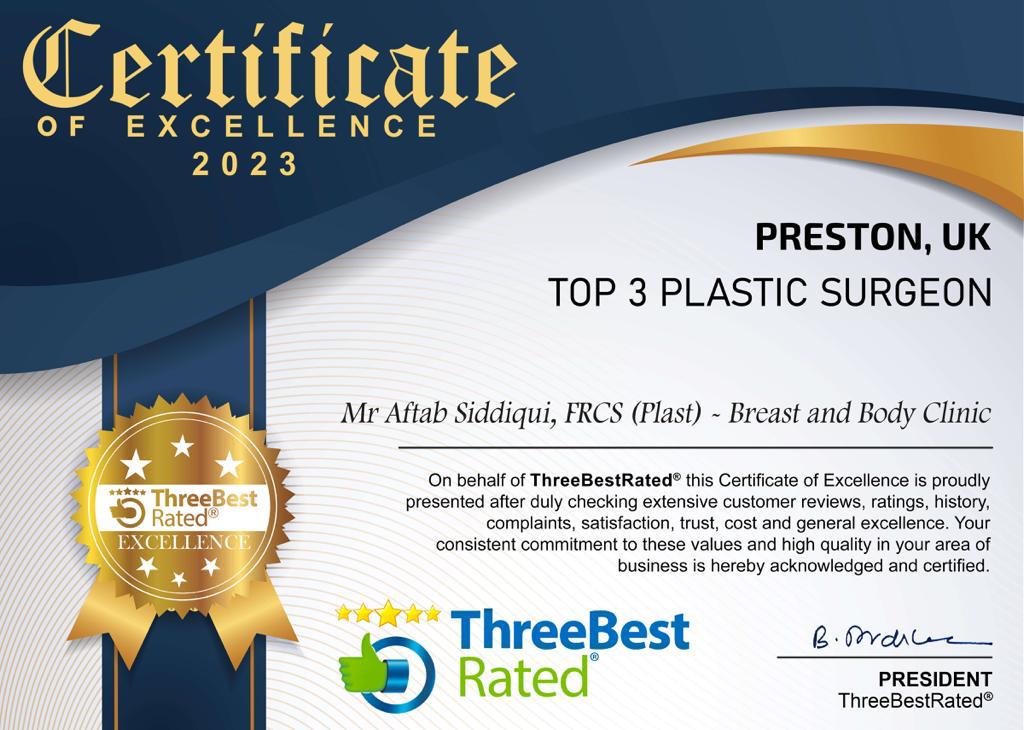


One of the top 10 Plastic Surgeons in Manchester

Over 9000 procedures performed

First Prize for Best Clinical Design at National Research Collaborative Meeting, London.

Over 22 Years experience in plastic surgery and cosmetic surgery practice in Northwest.

Awarded Certificate of Excellence 2022 by iWantGreatCare

5-Star Verified Doctor on RealSelf with 174 Reviews
Changes to breast shape are a natural part of life. Whether it’s happened gradually with age or after pregnancy, breastfeeding or weight loss, many women reach a point where their breasts may no longer look or feel the way they once did.
If you’re experiencing sagging breasts (also known as breast ptosis), it can cause physical discomfort, affect your confidence and make it harder to find clothes that fit well. Breast ptosis is one of the most common concerns we see at Breast & Body Clinic UK, and we offer personalised treatment options designed to address this condition.
What Is Breast Ptosis?
Breast ptosis is the medical term for sagging or drooping of the breasts. It occurs when the skin and supporting structures of the breast lose their firmness, causing the breast tissue and nipple to shift downward over time.
A certain amount of ptosis is completely normal and happens to nearly every woman over time. The skin loses elasticity, and the ligaments that support the breast (Cooper’s ligaments) begin to loosen. As a result, the breast may lose projection and fullness, particularly across the upper portion.
Breast ptosis is not a medical condition that poses health risks, but it can affect the way you feel about your appearance and, in some cases, cause physical discomfort such as skin irritation beneath the breast fold.
Breast Ptosis Grading
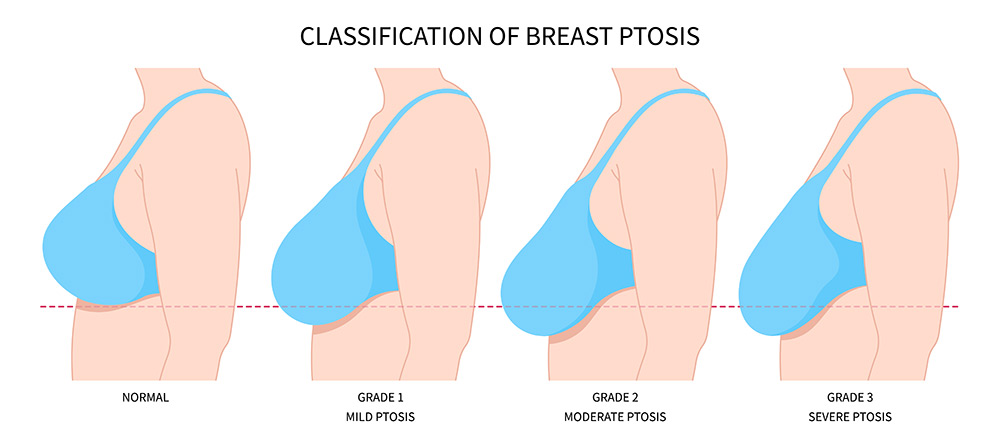
To determine how much the breast has changed, surgeons use the Regnault classification system. This measures where the nipple sits in relation to the inframammary fold, the natural crease where the breast meets the chest wall.
Grade I (mild ptosis)
The nipple sits roughly in line with the inframammary fold. There is only slight sagging, and the breast retains most of its natural shape and upper fullness.
Grade II (moderate ptosis)
The nipple has descended below the fold but remains above the lowest point of the breast. Drooping is more noticeable, often accompanied by reduced upper-pole fullness.
Grade III (severe ptosis)
The nipple lies well below the fold and typically points downward. At this stage, the breast has lost significant projection and its original contour.
Pseudoptosis
The nipple is still at or above the fold, but the breast tissue beneath it has dropped below the crease. This is particularly common after breastfeeding or significant weight loss.
What Causes Breast Ptosis?
There’s rarely a single cause. For most women, breast ptosis is the result of several factors working together over time.
Ageing
As you get older, the skin loses collagen and elastin, the proteins responsible for keeping it firm and supple. At the same time, the ligaments supporting the breast tissue gradually stretch under the effects of gravity. This is the most common cause of breast ptosis and affects all women to some degree.
Pregnancy and Breastfeeding
The breasts enlarge during pregnancy and breastfeeding, then often shrink afterwards. The skin that expanded to accommodate the larger size may not fully bounce back, leaving the breasts looking deflated. This effect tends to be more pronounced after multiple pregnancies.
Weight Fluctuations
Repeated cycles of gaining and losing weight stretch the skin and weaken its ability to snap back into shape, contributing to increased sagging.
Genetics
Just as genetics plays a role in breast size and shape, they also influence how quickly the skin and supporting tissues of the breast lose their firmness. Some women are naturally predisposed to developing ptosis earlier or more noticeably than others.
Hormonal Changes
The hormonal shifts that occur during menopause can accelerate the loss of skin elasticity and breast volume. As oestrogen levels decline, the breast tissue can become less dense and more prone to sagging.
Breast Size
Women with naturally larger or heavier breasts may experience ptosis more quickly due to the added gravitational pull on the breast tissue and skin.
Should I Consider Treatment for Breast Ptosis?
Breast ptosis is a natural part of life; however, if you’re finding that it’s affecting your confidence or causing skin irritation beneath the fold, it’s worth exploring treatment options.
Some of the reasons patients come to see us include:
- Loss of shape or fullness, particularly in the upper breast
- Nipples that point downward or sit below the breast crease
- Feeling self-conscious about breast appearance in or out of clothing
- Skin irritation or rashes beneath the fold
- Wanting to restore the shape they had before pregnancy or weight changes
Treatment Options for Breast Ptosis
The right treatment depends on the degree of ptosis, your breast size and what you’re hoping to achieve. Here are the most common approaches.
Breast Lift (Mastopexy)
This is the main treatment for breast ptosis. A breast lift repositions the breast tissue higher on the chest, removes loose skin and moves the nipple to a more natural position.
The specific technique used will depend on the amount of correction needed. Mild cases may only require a periareolar incision (around the areola), while more significant sagging typically calls for a vertical or anchor-shaped incision to allow for greater reshaping.
It’s important to know that a breast lift doesn’t dramatically change the size of your breasts. It’s about restoring shape and position. Many women find that their breasts look fuller after the procedure, simply because the tissue sits higher and in better proportion.

Breast Augmentation with Lift
For women who have lost both volume and shape, a breast lift alone may not be enough to achieve the result they’re looking for. Combining a lift with implants allows your surgeon to restore fullness while also repositioning the breast higher on the chest.
This is a popular option for women whose breasts have deflated after pregnancy or breastfeeding and who want to regain both projection and lift. Your surgeon will recommend an implant size and placement that works with your frame and complements the lift for a balanced, natural result.
Breast Reduction with Lift
For women whose breast ptosis is largely due to heavy, large breasts, a reduction may be an effective treatment choice. This procedure removes excess tissue and skin while lifting and reshaping the breast, addressing both weight and sagging simultaneously. Many patients report significant improvements in comfort, posture and confidence after this procedure.
Mummy Makeover
If sagging breasts are just one part of a bigger picture of post-pregnancy body changes, a mummy makeover may be suitable as it combines breast surgery with procedures like liposuction or a tummy tuck.
Wondering if Breast Procedure Surgery is Right For You?
Find Out Today
Why Choose Breast & Body Clinic UK
for Your Breast Procedure?
At Breast & Body Clinic UK, we combine surgical expertise with a personalised, patient-centred approach. Our team of highly trained surgeons in Manchester are dedicated to delivering natural-looking results. With over 19 years of experience and 9,000+ cosmetic procedures performed, our Manchester clinic is a trusted destination for individuals considering breast surgery.
We encourage you to book a free consultation with our expert surgeons. During your consultation, we’ll assess your concerns, discuss your goals and provide a tailored recommendation.

Meet Mr Siddiqui
MBBS (Hons), MRCS Ed, M.Ch, FRCS (Plastic Surgery) Consultant Plastic and Cosmetic Surgeon CHESTER | MANCHESTER
Mr Siddiqui holds the position of Consultant Plastic Surgeon at The Countess of Chester Hospital, where he is a valuable member of the Plastic and Reconstructive Surgery Department. He is widely recognised as one of Manchester’s foremost cosmetic surgeons, consistently ranking among the top 10 in his field.
Having completed comprehensive training in plastic surgery, he later took on the role of an NHS Consultant and has since expanded his expertise to create a private practice serving the communities of Manchester, Chester, and Preston.
How to book your initial consultation
- Fill out our online booking form
- Call us: 03334441362
- Email us: info@breastandbody.co.uk
Wondering if Breast Procedure Surgery is Right For You?
Find Out Today
FAQs
Is breast ptosis normal?
Yes. Breast ptosis is completely normal and something most women will experience at some point in their lives. It’s a natural part of ageing, and factors like pregnancy, breastfeeding, weight changes and genetics all play a role in how and when it develops. The degree of sagging varies from person to person, but some level of change over time is to be expected.
Is breast ptosis reversible?
Exercise and lifestyle changes alone cannot reverse breast ptosis, as once the skin and supporting ligaments of the breast have stretched, they won’t return to their original position on their own. Surgical options such as a breast lift are the most effective way to restore shape, position and firmness.
At what age does breast ptosis start?
There’s no set age at which breast ptosis begins, as it varies among individuals. Some notice changes as early as their twenties or thirties, particularly after pregnancy or breastfeeding, while others may not see significant sagging until later in life. Genetics, skin elasticity and breast size all influence when and how quickly it develops.
Will not wearing a bra cause sagging?
The evidence on this is inconclusive. A supportive bra can help reduce breast movement and strain on the tissue, but there’s no definite research to confirm that going without one directly causes ptosis. The main contributors to breast ptosis are genetics, ageing and the natural effects of gravity over time.
Is breast ptosis unattractive?
Breast ptosis is a completely natural part of life and something that nearly all women experience over time. It says nothing about your attractiveness or worth. That said, we understand that changes to your body can affect how you feel about yourself, and those feelings are valid. If breast ptosis is something that bothers you, treatment options are available to help you feel more comfortable and confident in your own skin.
How do I know if I have breast ptosis?
A simple way to check is to look at where your nipple sits in relation to the crease beneath your breast. If your nipple is at or below this fold, some degree of breast ptosis is likely. For a proper assessment, a consultation with a qualified surgeon will give you a clearer picture and help determine the best course of action.
How common is breast ptosis?
Very common. It affects the majority of women at some stage of life, particularly after pregnancy, breastfeeding, weight changes or menopause. It’s one of the most frequent concerns raised during our consultations.
What are the symptoms of breast ptosis?
The most obvious sign is a visible change in breast shape, with the nipple and tissue sitting lower than before. Other signs include loss of fullness in the upper breast, a flatter or more elongated shape, downward-pointing nipples and, in some cases, skin irritation beneath the breast fold.
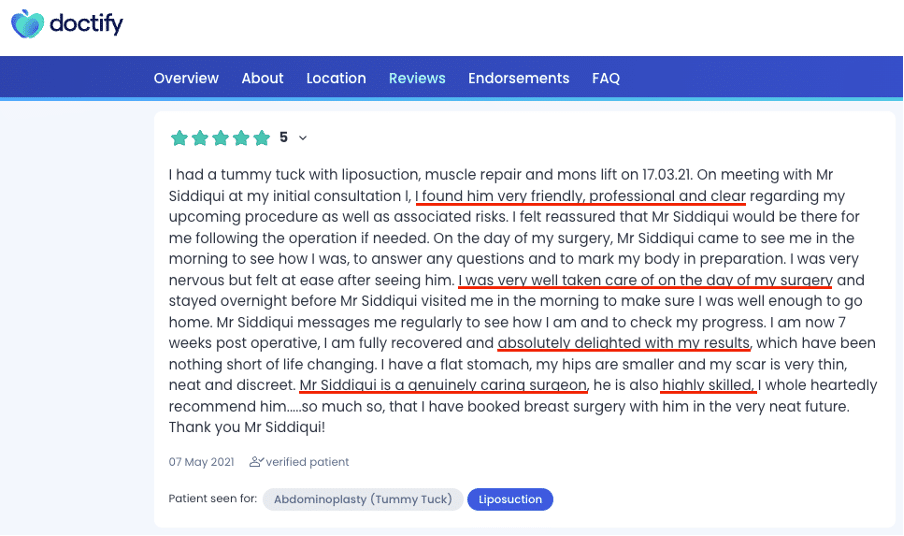
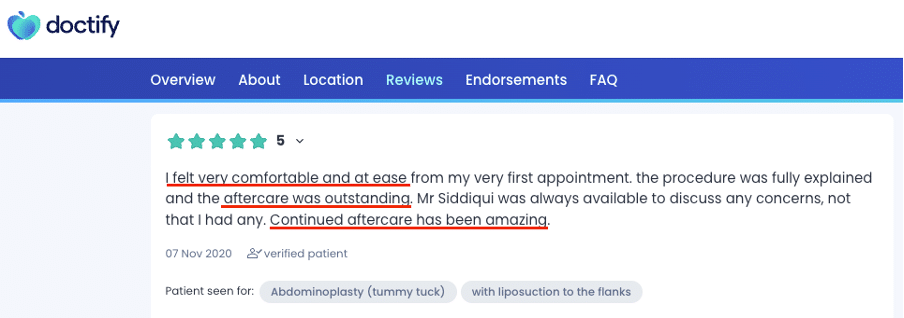
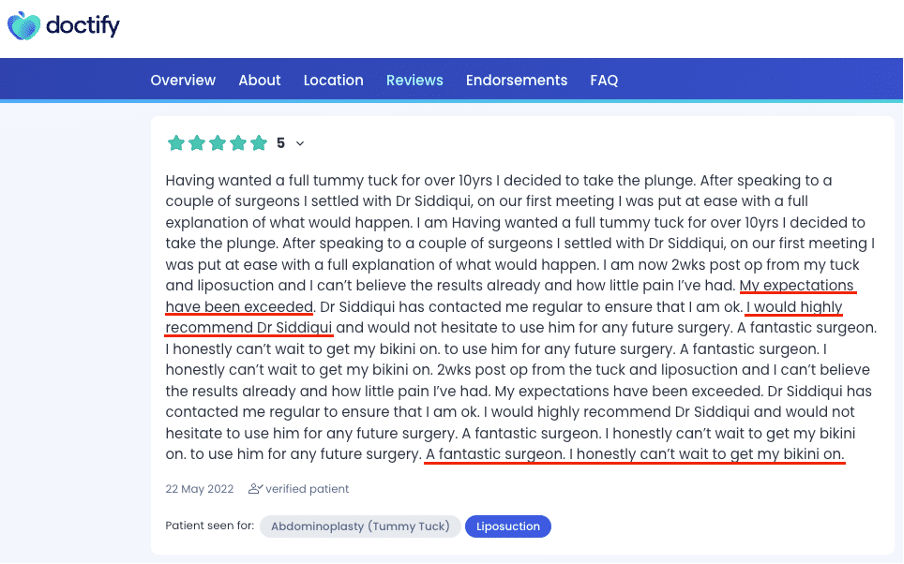
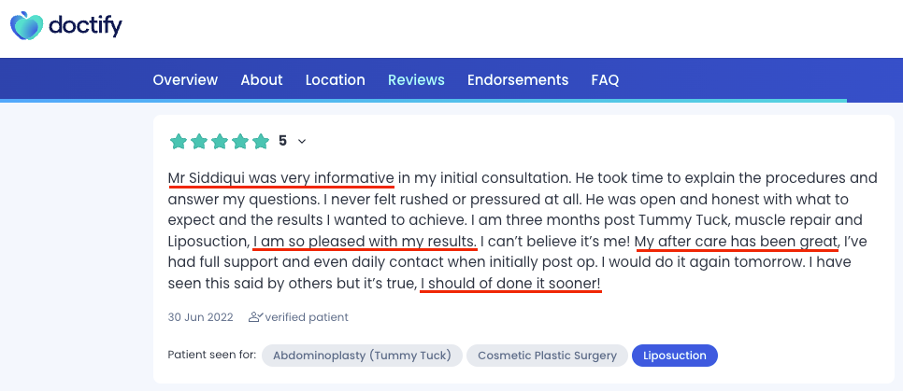
PATIENTS REVIEWS

Ask Us a Question
Any questions or looking for a consultation? Simply fill in the form below and
we will get back to you promptly with a reply. We are always here for you!
 Online Marketing For Doctors